
The Global Irish Famine Way: Connecting Ireland’s Emigration Story Across the World
At a Glance
The Global Irish Famine Way uses a simple but powerful symbol – a pair of bronze children’s shoes – to connect Ireland with communities shaped by Famine-era emigration. For travelers interested in Irish history, ancestry, and the diaspora, it offers a new way to understand where those journeys began, where they led, and the communities that remember them today.
Travel Planning Snapshot
- Irish starting point: Strokestown Park, County Roscommon
- Original route: National Famine Way, approximately 165 km from Strokestown to Dublin
- Global connections: UK, Canada, the United States, and expanding internationally
- Best for: Irish history, genealogy, diaspora connections, and meaningful heritage travel
- Symbol to look for: Bronze children’s shoes
- Ireland experience: National Famine Museum and sections of the National Famine Way
- Special event: 180th anniversary of Black ’47 in May 2027
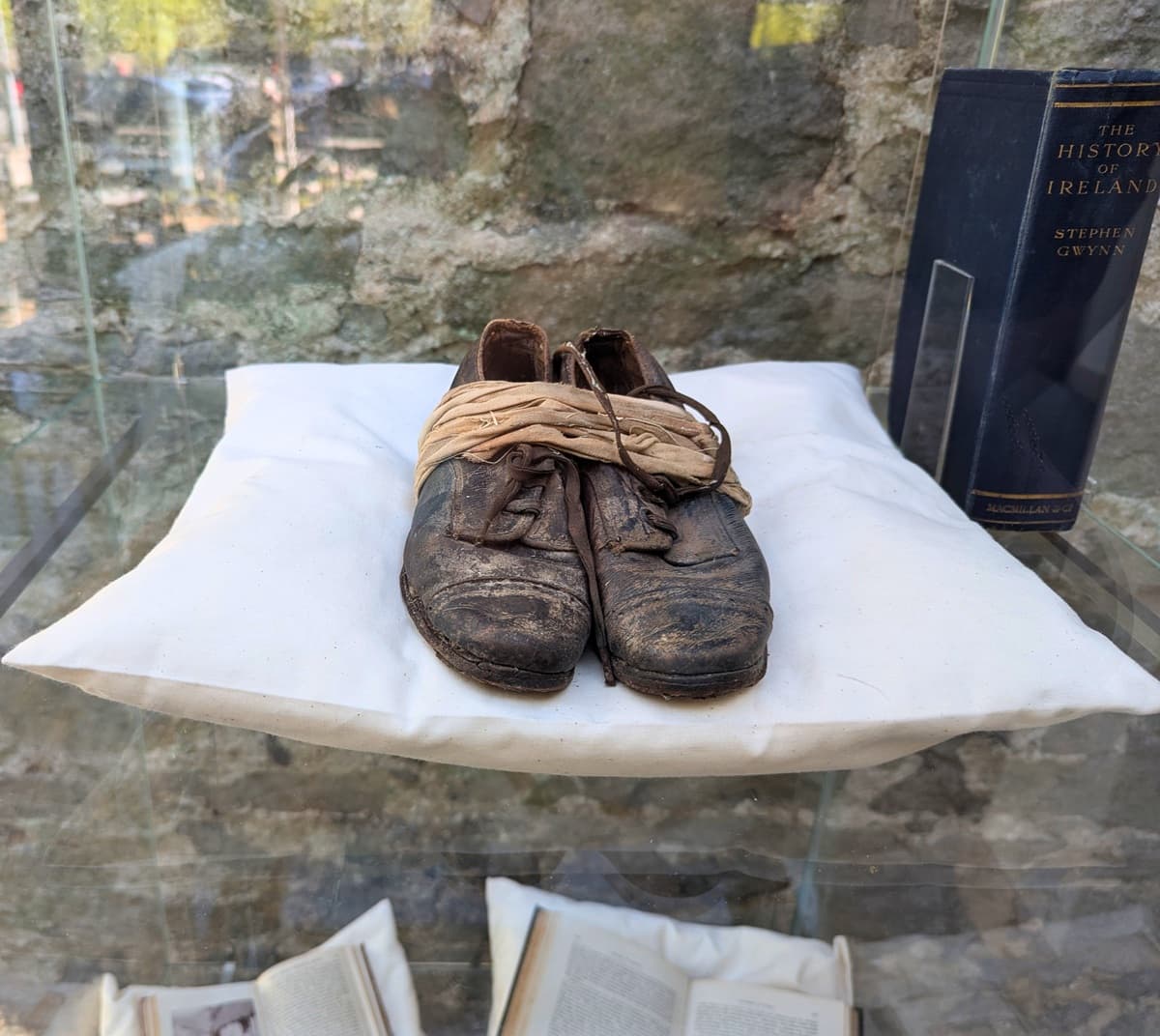
A tiny pair of children’s shoes found tucked into the rafters of a 19th-century cottage in County Roscommon probably wasn’t meant to tell a story that stretched around the world.
But that is exactly what has happened.
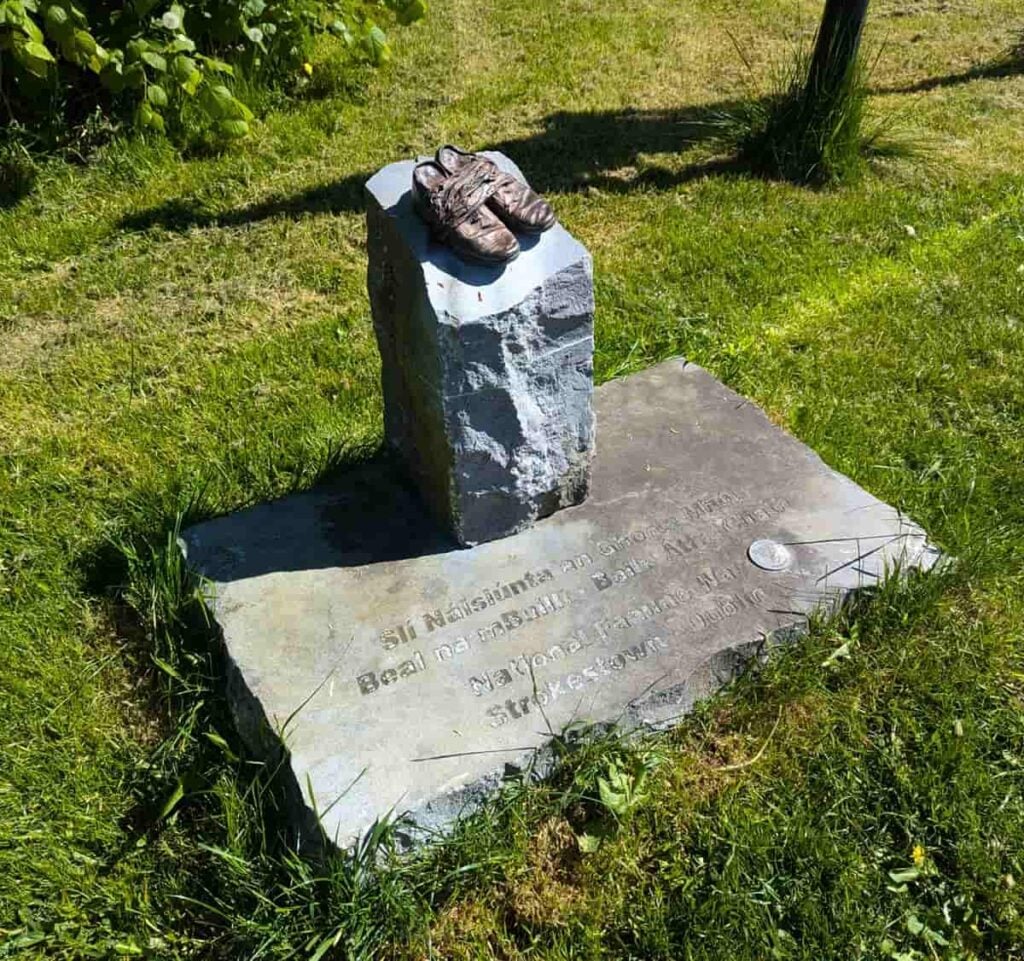
Cast in bronze, those shoes first became markers along the National Famine Way, the route taken by 1,490 people who left Strokestown in 1847 and walked to Dublin before continuing toward Liverpool and Quebec.
Now those same shoes are appearing thousands of miles from Ireland, connecting the places emigrants left behind with the communities where they arrived.
This article is based on podcast episode 354 featuring Caroilín Callery, Founder of the National Famine Way, along with Edel McWeeney Moran, Communications and Stakeholder Engagement Manager with the National Famine Way.
Use the player below to listen or scroll to continue reading the article and get resource links.
Podcast: Play in new window | Download
Subscribe: Apple Podcasts | Spotify | Amazon Music | Android | iHeartRadio | RSS
How the Global Irish Famine Way Connects the Irish Diaspora
The story begins at Strokestown Park in County Roscommon, home to the National Famine Museum and an extraordinary archive documenting the Great Famine at a very personal level.
Strokestown Park is managed and cared for by the Irish Heritage Trust, preserving not only the estate but the records that allow individual Famine stories to be told.
Among those records are the names of 1,490 people who left the Strokestown estate through an assisted emigration scheme in 1847.
Their journey across Ireland is now commemorated by the National Famine Way, a roughly 165-kilometer route from Strokestown to Dublin via Clondra and the Royal Canal.
But Dublin wasn’t their destination.
It was only the beginning.
Bronze Shoes That Lead Beyond Ireland
More than 30 pairs of bronze shoes mark the National Famine Way in Ireland.
The original shoes were found tightly wrapped in linen and hidden beneath the rafters of an old cottage on the Strokestown estate, perhaps placed there for protection or good luck.
Their small size makes them an especially poignant symbol.
They aren’t simply a memorial to “emigration.” They remind us that the people leaving Ireland were individuals – including children – walking away from homes and communities without knowing what waited for them.
The Global Irish Famine Way takes that symbol to the places where Irish emigrants continued their journeys.
From Strokestown to Canada
The idea began taking shape internationally in 2023, when Ireland’s then-ambassador to Canada, Eamonn McKee, contacted National Famine Way founder Caroilín Callery.
One pair of bronze shoes in Canada was the initial idea.
That didn’t last long.
Communities with their own Famine-era connections wanted to participate, and by May 2024, 15 Canadian locations had requested bronze shoes.
The response demonstrated how deeply this history still resonates within the Irish diaspora. When shoes arrived in St. John’s, Newfoundland, people queued to touch them – including descendants of Irish emigrants who had never visited Ireland themselves.
That emotional connection is really the heart of the Global Irish Famine Way.
It’s not simply extending an Irish heritage trail overseas. It’s reconnecting two halves of the same story.
The Global Irish Famine Way Comes to the United States
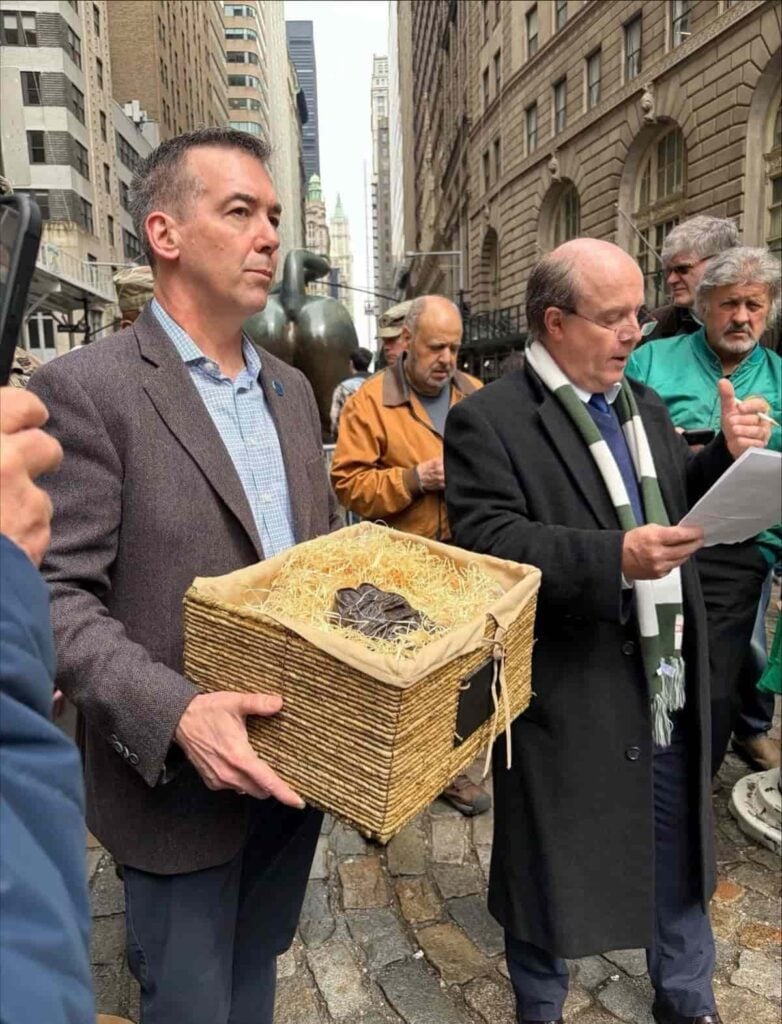
The project is now expanding into the United States, where countless communities were shaped by Famine-era Irish immigration.
Staten Island is among the first American locations, with interest also coming from communities around Boston and elsewhere.
But receiving a pair of bronze shoes isn’t simply a matter of asking for one.
Locations must document a genuine connection to Famine-era emigration. Historical evidence is reviewed by experts, and that process is already bringing overlooked stories back into local memory.
It’s also generating new research.
In Canada, research connected with the project has identified first responders who died while caring for sick Irish emigrants and brought renewed attention to Famine-era burial sites. As more communities investigate their own connections, the trail becomes more than a collection of memorials. It becomes a growing historical record.
Connecting Irish Departure Ports With the World
The next stage may be even more fascinating for travelers with Irish ancestry.
Famine emigrants departed from more than 30 ports around Ireland, including Dublin, Sligo, Moville, Youghal, and Dingle.
The Global Irish Famine Way hopes to connect those departure points with arrival ports around the world – and, when records allow, identify the ships and families that traveled between them.
Canada and the United States are only part of that story. Irish emigrants also built new lives in Australia, Argentina, South Africa, and elsewhere.
Bronze shoes will provide the physical connection between places, while QR codes link locations digitally through the Global Irish Famine Way.
For descendants of Irish emigrants, that creates an intriguing possibility: connecting family stories with the ports and communities that formed part of the wider Famine emigration story.

Experience the National Famine Way for Yourself
Travelers don’t need to walk the entire National Famine Way to understand the history behind the global project.
Start at Strokestown Park and the National Famine Museum, where the archive and original children’s shoes provide context for everything that follows.
From there, walk or cycle a portion of the route toward Clondra and the Royal Canal. Even a short section gives a sense of the distance families traveled before they ever reached a ship.
For travelers with more time, sections can be combined with cycling, kayaking, community visits, and stops in the small towns along the route.
The National Famine Way can be experienced at any time, but May 2027 offers a unique opportunity. The 180th anniversary of Black ’47 will bring special commemorations to Strokestown Park and communities along the route, including the annual Remembrance Walk.
Plan Your National Irish Famine Way Experience
The National Famine Way website is the best resource for exploring the route in Ireland, discovering Global Irish Famine Way locations around the world, and finding information about upcoming events.
Website: National Famine Way & Global Irish Famine Way
Follow on Facebook & Instagram for updates.
2027 Dates to Know
May 13-16: International Conference at the National Famine Museum, Strokestown Park
May 15: Canadian Wake at Strokestown Park
May 16-23: National Famine Way Remembrance Walk from Strokestown to Dublin
Walkers can also receive a National Famine Way passport pack with a ship ticket bearing the name of one of the families who left Strokestown in 1847. Those following the route carry that family story with them, with the opportunity to discover their fate at the end of the journey in Dublin.
Travelers don’t have to commit to the full Remembrance Walk. Joining for a day or even a section of the route offers a meaningful way to be part of the 180th anniversary commemorations while still leaving plenty of time for the rest of an Ireland vacation.

Start planning your own route
The Ireland Travel Compass brings together hundreds of places across the country and helps you turn ideas like these into a trip that fits your time and travel style.
The Great Famine scattered Irish families across the world. For generations, the story has often been told in two pieces: the people who left Ireland and the communities they created elsewhere.
The Global Irish Famine Way is bringing those pieces back together.
And it all begins with a small pair of shoes.
Global Irish Famine Way FAQs
What is the difference between the National Famine Way and the Global Irish Famine Way?
The National Famine Way is a 165 km heritage trail in Ireland following the route taken by 1,490 people who left Strokestown in 1847. It begins at Strokestown Park in County Roscommon and continues to Dublin.
The Global Irish Famine Way carries that story beyond Ireland, connecting places associated with Famine-era emigration through bronze shoe memorials and local history.
Where does the National Famine Way begin and end?
The National Famine Way begins at Strokestown Park in County Roscommon and ends in Dublin. The route travels from Strokestown to Clondra in County Longford before following the Royal Canal toward Dublin.
Do you have to walk the entire National Famine Way?
No. Travelers can experience individual sections of the National Famine Way without completing the full route. Walking and cycling are both options, and kayaking and other activities can also be incorporated into portions of the journey.
This makes it quite easy to include part of the National Famine Way in a typical Ireland itinerary.
Where can you see the bronze Famine shoes?
The original children’s shoes that inspired the symbol can be seen at Strokestown Park. More than 30 pairs of bronze shoes mark the National Famine Way between Strokestown and Dublin.
Bronze shoes are also being installed at approved Global Irish Famine Way locations outside Ireland, connecting communities with documented ties to Famine-era Irish emigration.
Can I join the National Famine Way Remembrance Walk in 2027?
Yes. The 2027 National Famine Way Remembrance Walk takes place May 16-23, traveling from Strokestown to Dublin as part of the commemorations marking the 180th anniversary of Black ’47.
Travelers don’t have to complete the entire eight-day route. You can join the walk for individual days or sections, making it possible to participate while still enjoying the rest of your Ireland vacation.


