Tracing Irish Roots: How to Research Your Family History and Find the Stories Behind the Names
For many North Americans, discovering Irish ancestry begins with a family story. Maybe a grandparent mentioned a county in Ireland. Perhaps there’s an old photograph, a faded letter, or a surname that has been passed down through generations. The excitement of uncovering those connections can quickly turn into frustration when records become difficult to find and family trees seem to contradict each other.
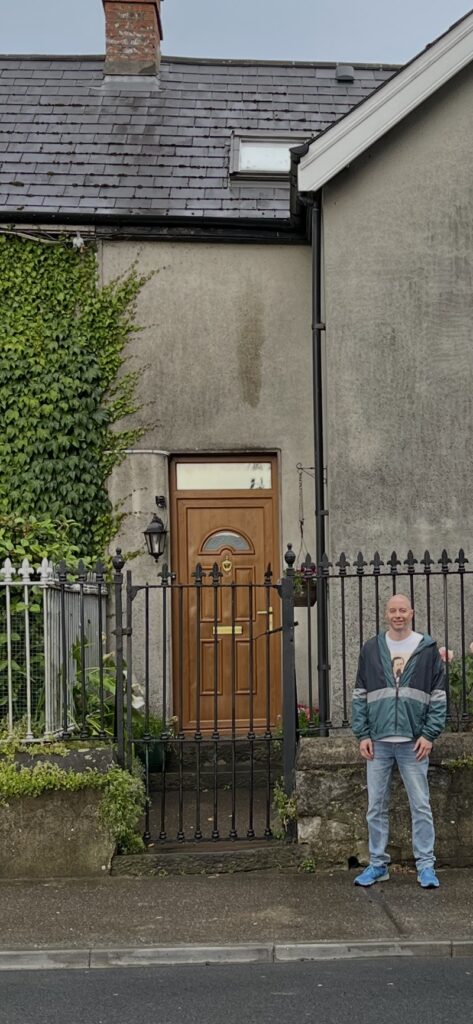
Genealogist Chris Lucia has spent years helping people navigate that journey. His own research led him all the way to the front door of his great-grandfather’s birthplace in County Tipperary – a moment that demonstrates just how rewarding Irish family history research can be when patience, persistence, and a little Irish luck come together.
Podcast: Play in new window | Download
Subscribe: Apple Podcasts | Spotify | Amazon Music | Android | iHeartRadio | RSS
This article is based on podcast episode 344 featuring Chris Lucia, owner of Vivid Family Research.
Use the player below to listen or scroll to continue reading the article and get resource links.
Irish Genealogy Research: Why It Feels So Challenging
Irish genealogy has a reputation for being difficult, and for good reason.
Many family historians successfully trace ancestors through North American records only to encounter obstacles once they reach Ireland. Part of the challenge stems from the loss of important historical records during the destruction of Dublin’s Public Records Office in 1922.
The fire destroyed much of Ireland’s early census material, many Church of Ireland parish registers, wills, and legal records. Yet despite the losses, researchers shouldn’t assume all records disappeared.
The surviving 1901 and 1911 (and newly released 1926) Irish census records remain invaluable resources. Many parish records still exist, civil registration records are available, and local archives continue to preserve information that can help connect families to specific places and people.
The key is understanding where to look and approaching the process methodically.
How to Start Irish Genealogy Research Without Feeling Overwhelmed

Start With Yourself and Work Backward
One of the most common mistakes new researchers make is trying to jump directly to Ireland.
Instead, begin with the information closest to home.
Gather details about parents and grandparents. Search for birth certificates, marriage records, death certificates, obituaries, census records, and family documents. Every record can provide clues that lead to the previous generation.
A grandmother’s death certificate may reveal the names of her parents. A census record might indicate that an ancestor was born in Ireland. Each small discovery becomes the foundation for the next step.
Focus on One Question at a Time
Genealogy has a way of creating endless rabbit trails.
A researcher might begin looking for one ancestor and suddenly find themselves investigating cousins, neighbors, military records, and immigration documents all at once.
Chris recommends narrowing the focus.
Instead of attempting to build an entire family tree in a single weekend, choose one ancestor or one specific question. Find where a great-grandparent was born. Identify a marriage location. Confirm a date.
Small victories build confidence and keep the process enjoyable.
Treat Family Trees as Clues, Not Proof
Websites such as Ancestry.com and FamilySearch are excellent starting points, but they require careful evaluation.
Public family trees can provide useful hints, but they should never be accepted without verification. Similar names, incorrect dates, and unsupported assumptions can spread quickly online.
As Chris advises, “hints are clues, not conclusions.”
Every discovery should be backed by records whenever possible.

Irish Genealogy Resources Worth Exploring
Once genealogy research begins pointing toward Ireland, several resources become especially valuable.
Griffith’s Valuation
One of the most useful Irish records available, Griffith’s Valuation documents land occupiers throughout Ireland during the mid-1800s.
For travelers planning a heritage trip, it can be particularly exciting because modern mapping tools allow researchers to compare historic maps with current satellite imagery. In many rural areas, field boundaries and roads remain remarkably unchanged.
Tithe Applotment Books
Created earlier than Griffith’s Valuation, these records provide another way to place ancestors in specific locations and time periods.
IrishGenealogy.ie
This free resource includes civil records and many Church of Ireland records, making it a valuable starting point for Protestant ancestry research.
National Archives of Ireland
The surviving 1901 and 1911 (and recently released 1926) census records can be searched online at no cost and often provide a detailed snapshot of family life.
National Library of Ireland
Researchers with Catholic ancestry will find digitized parish registers available through the National Library’s collections.
Patience is required. Many entries are handwritten, often in Latin, and deciphering them can feel like solving a puzzle. Still, those pages frequently contain the breakthrough information researchers have been searching for.
Taking Your Irish Family History Research to Ireland
For many people, the ultimate goal is visiting the places where their ancestors lived.
That experience can be extraordinary.
Chris spent years researching his great-grandfather’s birthplace in County Tipperary. After multiple unsuccessful attempts to connect with the home’s current owners, a local Facebook group eventually led him to the family that now owns the property.
Not only was he welcomed inside, but he was also given a tour of the home where his great-grandfather had lived more than 130 years earlier. Walking through those rooms transformed names and dates into something much more personal.
Visit Ireland’s Genealogy Centers
Travelers interested in ancestry research should consider spending time at:
- EPIC The Irish Emigration Museum and its Irish Family History Centre
- Representative Church Body Library for Church of Ireland records
Both can provide valuable assistance for those hoping to continue their research while in Ireland.
Talk to People
Sometimes the most valuable resource isn’t found in an archive.
It’s found in a conversation.
Local residents, church members, publicans, driver-guides, and community groups often possess knowledge that never appears in official records. A casual chat can lead to family connections, local stories, or insights about an ancestral townland.
Ireland remains a place where storytelling thrives, and family history often survives through those stories.
When It’s Time to Hire a Professional Genealogist
Genealogy should be enjoyable.
When the research becomes frustrating, when time becomes limited, or when a seemingly impossible brick wall appears, it may be worth consulting a professional.
The more information a researcher receives at the start, the more effective they can be. Names, dates, locations, family stories, and existing research all help narrow the search.
Professional genealogists don’t simply collect records. They connect those records to real lives, historical context, and family narratives.
That’s often where the most meaningful discoveries happen. A name on a census page becomes a person. A passenger list becomes the story of a widow crossing the Atlantic with three young children. A family legend gains evidence – or finally gets debunked.
And occasionally, all of that work leads to standing inside the very house where an ancestor began their journey.
Working with Vivid Family Research
Based in the United States and working with clients researching Irish and North American ancestry, Chris Lucia founded Vivid Family Research to help people uncover the stories hidden within their family history. His approach combines traditional record research with historical context, creating a narrative that helps families better understand not just who their ancestors were, but how they lived.
Travelers planning a heritage trip to Ireland may find professional research especially valuable. Identifying an ancestral townland, locating family property, or verifying family connections before arriving can transform a sightseeing itinerary into a deeply personal journey.
For more information, visit the website at vividfamilyresearch.com or contact Chris directly at vividfamilyresearch@gmail.com.
Three Tips for a Successful Irish Ancestry Journey
1. Give Yourself Plenty of Time
Genealogy is rarely a quick project. The best discoveries often come after months or years of careful research.
2. Stay Organized
Create folders, save documents, and keep notes. Good organization prevents confusion and makes future discoveries easier to connect.
3. Leave Room for the Unexpected
Whether you’re researching online or traveling through Ireland, some of the best moments can’t be planned.

Start planning your own route
The Ireland Travel Compass brings together hundreds of places across the country and helps you turn ideas like these into a trip that fits your time and travel style.
A chance conversation, a helpful local, or a Facebook post in a community group may reveal information no archive could ever provide.
Family history isn’t just about building a tree. It’s about uncovering the stories, struggles, decisions, and journeys that shaped the generations that came before us. For anyone with Irish ancestry, those discoveries can create a connection to Ireland that feels far more personal than any guidebook ever could.