
Using Credit Card Coverage for a Car Rental in Ireland: What You Must Understand
Credit card coverage can be a good option for a car rental in Ireland, but simply having rental car protection on your card doesn’t mean you’re covered. Some cards exclude Ireland entirely, while others have limits on the vehicles they cover, the length of the rental, or the amount they’ll pay.
Before you decline the rental company’s collision damage waiver, you need to understand exactly what your credit card covers, what the rental company requires, and what happens if the car is damaged.
I recommend watching the video below for the complete visual walk-through of this content.

Before You Rely on Credit Card Coverage for an Ireland Car Rental
The challenge with credit card coverage isn’t simply finding a card that offers it. Most people don’t realize they are working with two separate sets of rules: the terms of your credit card benefit and the requirements of the Ireland car rental company. Both have to work together for credit card coverage to be a practical option for your rental.
First, Make Sure Your Credit Card Covers Ireland
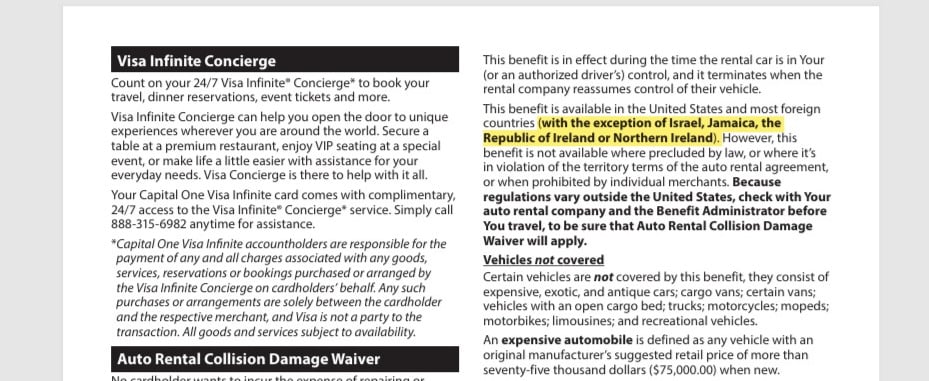
Don’t assume that a credit card covers Ireland simply because it advertises worldwide rental car protection.
One of my own premium travel cards is a good example. The Capital One Venture X offers rental car coverage in many countries, but the card benefits specifically exclude both the Republic of Ireland and Northern Ireland. Other cards have different exclusions.
Start with the cards you already have. Find the rental car benefit in each card’s Guide to Benefits and look specifically for geographic restrictions. Search for terms like “worldwide” and “Ireland,” and read the exclusions.
And I wouldn’t recommend getting an expensive premium travel card solely to save money on insurance for one Ireland car rental. Consider the cost of the card and its other benefits before deciding whether it makes financial sense for you.
Find Out What Proof the Rental Company Requires
Your credit card determines whether you have coverage.
The rental company determines what proof it requires before allowing you to decline its collision damage waiver, or CDW.
Those are two separate things.
You may be able to decline the rental company’s coverage while making your reservation online, but that doesn’t necessarily mean you won’t be asked for documentation when you pick up the vehicle.
A letter of coverage from your credit card benefit provider may be required.
I recommend having that letter with you even if you don’t think you’ll need it. Request it from your credit card company no more than 2 weeks before the day you pick up your rental – most make it easy to do on their app or website – and bring a printed copy with you when you pick up the car.
Be sure to check your rental company’s current requirements and your credit card’s current terms before you travel.
Understand What Credit Card Rental Coverage Covers
Credit card rental protection should not be confused with the comprehensive car insurance you may be accustomed to at home.
The coverage is primarily protecting the rental vehicle.
Depending on your card, covered expenses may include damage or theft of the rental vehicle, eligible loss-of-use charges from the rental company, and towing.
But the list of things that aren’t covered can be considerably longer.
Your card may exclude personal belongings, personal injury, damage to property outside the rental vehicle, certain types of vehicles, violations of the rental agreement, and other losses.
This is why you need to read more than the headline benefit.
Compare what your credit card provides with the excess coverage available from the rental company. The right choice is the one that gives you a level of financial risk you’re comfortable accepting.
Know What You’re Declining at the Rental Counter
There can be confusion around the phrase “declining insurance” when renting a car in Ireland.
You aren’t necessarily declining every type of protection attached to the rental.
Third-party liability covers your legal liability for injury or property damage you cause to other people. This remains in place.
The collision damage waiver, or CDW, relates to your financial responsibility to the rental company when its vehicle is damaged.
When you decline CDW to use eligible credit card coverage, you’re declining the rental company’s protection for damage to its vehicle. You aren’t declining the required third-party liability protection.
Understanding that distinction makes the choices on the rental agreement much easier to follow.
Be Prepared for a Hold on Your Credit Card
If you decline the rental company’s CDW, expect the company to place a hold on your credit card.
The amount varies by rental company and may also depend on factors such as the vehicle you choose and the length of your rental. Check the terms for your specific reservation.
You need enough available credit for the hold and for any other trip expenses you plan to charge to the same card.
Another fee you may encounter: a cost to use your credit card coverage. I have seen this at Hertz/Dollar/Thrifty locations.
Check Coverage Limits, Vehicle Restrictions, and Rental Length
Credit cards don’t all provide the same maximum rental car benefit.
Each ‘level’ of credit cars has different dollar limits and methods for determining how much would be paid after a loss.
That matters because you need to consider the value of the vehicle you’re renting.
Ask yourself a simple question: if this car were totaled, would my credit card benefit be enough to cover the loss?
You should also check whether your particular type of rental vehicle is eligible. Depending on the card, exclusions may include vehicles such as antique cars, cargo vans, motor homes, motorcycles, or mopeds.
Car-sharing services may also be excluded.
Then check the maximum rental period. Coverage might apply for 28 days with one provider and 31 days with another. Don’t assume the terms are consistent from one card or rental company to another.
Understand What Happens If the Car Is Damaged
This is one of the most important parts of relying on credit card coverage.
If your Ireland rental car is damaged, you will be charged by the rental company. That charge goes onto your credit card.
You then file a claim with the credit card’s benefit administrator for reimbursement.
My experience using credit card coverage after an Ireland rental car accident
That process can take time, and you’ll need to provide the required documentation.
Meanwhile, you still have a charge sitting on your credit card. If you don’t pay that balance, it may accrue interest.
Think through that possibility before deciding whether credit card coverage is the best option for you.
Read the Claims Requirements Before Your Ireland Trip
Don’t wait until an accident happens to learn how your credit card’s claims process works.
Before you travel, find out:
- Who you need to contact after an incident
- How quickly you must report a loss
- What documents you need from the rental company
- Whether you need to notify law enforcement
- How and when proof of loss must be submitted
- How reimbursement is handled
Having this information in advance can make an already stressful situation much easier to manage.
Pro Tip: Photograph Your Rental Car Carefully
If you’re relying on credit card coverage, I recommend documenting the vehicle thoroughly.
At pickup, photograph every side of the vehicle as well as the wheels and glass. Take clear photos of existing scratches, dents, or other damage.
If something happens during your rental, photograph the damage and anything else relevant to the incident.
Then photograph the vehicle again when you return it. When possible, include evidence showing where and when the vehicle was returned.
This isn’t necessarily a requirement of your coverage. It’s simply good documentation to have if a damage charge is disputed later.
Is Credit Card Coverage Right for Your Ireland Car Rental?
Credit card coverage can be a good option for an Ireland car rental, and it may save you money. But that doesn’t mean it’s automatically the best option for every traveler.
Before relying on it:
- Confirm that your specific card covers Ireland.
- Read the coverage limits and exclusions.
- Make sure your rental vehicle and rental period qualify.
- Check what your rental company requires at pickup.
- Get a letter of coverage if needed.
- Know how large a credit card hold to expect.
- Understand the claims and reimbursement process.
- Document the vehicle carefully.
If that feels like more financial exposure or paperwork than you’re comfortable handling, purchasing excess coverage from the rental company is another option.
More information about Ireland Car Rental Insurance and Excess CDW
Neither choice is automatically right for everyone. The important thing is understanding what you’re accepting—and what you’re responsible for—before you pick up your Ireland rental car.
Complete Resource: Ireland Car Rental & Driving Guide
Traveling in Ireland podcast episode 352
Podcast: Play in new window | Download
Subscribe: Apple Podcasts | Spotify | Amazon Music | Android | iHeartRadio | RSS


